


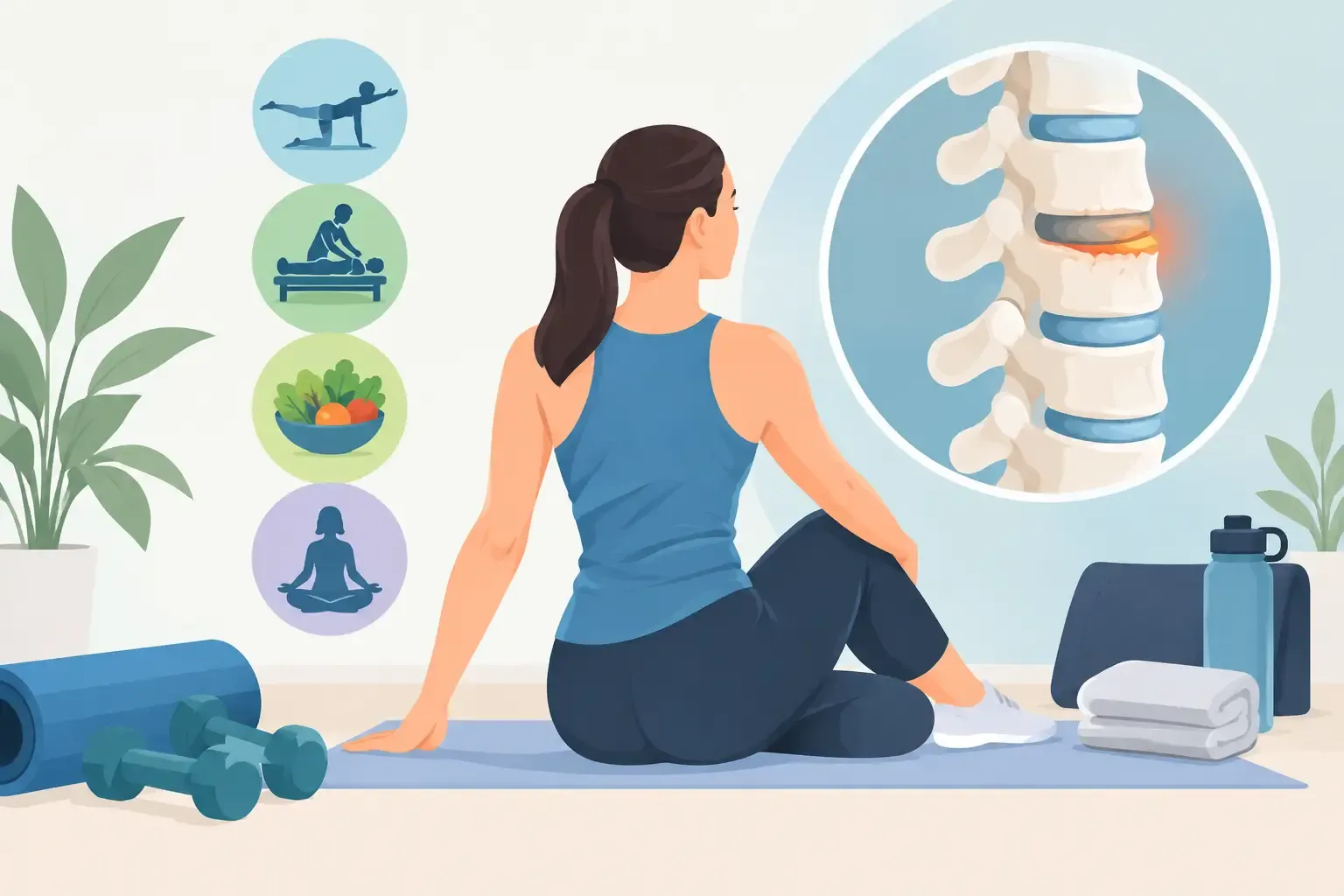
How to Manage Disc Degeneration Without Surgery
A stiff lower back when you get out of the car, pain that interrupts a round of golf, or numbness that makes a long walk feel uncertain can change far more than your workout routine. To manage disc degeneration effectively, the goal is not simply to quiet pain for a few hours. It is to identify what is stressing the spine, protect nerve function, improve movement capacity, and build a plan that supports the tissues around the affected disc.
Disc degeneration is common with age, but it is not a sentence to stop moving or accept a smaller life. Many people with degenerative disc changes on imaging have little or no pain. Others have significant symptoms despite a relatively modest-looking MRI. That difference is why individualized care matters: a scan is one piece of the picture, not the whole diagnosis.
What Disc Degeneration Means for Your Spine
Spinal discs sit between the vertebrae and act as shock absorbers. Each disc has a durable outer ring, called the annulus fibrosus, and a softer, water-rich center, called the nucleus pulposus. Over time, discs can lose hydration, height, and flexibility. Small tears in the outer ring may develop, and the changes can alter how forces move through the spine.
This process may be influenced by aging, genetics, prior injury, repetitive loading, smoking, excess body weight, metabolic health, and prolonged inactivity. Degeneration can occur in the neck or low back and may exist alongside disc bulges, herniations, spinal stenosis, facet-joint arthritis, or muscle deconditioning.
Symptoms vary. Some people feel localized aching, stiffness, or pain with bending, sitting, or twisting. Others develop pain that travels into an arm or leg when inflammation or disc material irritates a nerve root. Weakness, changing reflexes, and progressive numbness deserve prompt medical attention.
How to Manage Disc Degeneration Day to Day
The right plan depends on your symptoms, exam findings, activity goals, and the condition of the rest of your spine. A person with occasional mechanical low-back pain needs a different strategy than someone whose leg pain is limiting sleep and walking.
Keep Moving, but Choose the Right Dose
Complete rest often makes back pain harder to manage. When muscles stop working, the spine can lose support, joints stiffen, and confidence in movement can decline. The better approach is graded activity: enough movement to maintain circulation, mobility, and strength without repeatedly provoking sharp or radiating pain.
Walking, pool exercise, stationary cycling, and carefully selected strength training can be valuable starting points. Physical therapy can help restore hip mobility, improve core endurance, and teach safer lifting and bending mechanics. The objective is not to brace the spine rigidly all day. It is to develop control and capacity so everyday tasks feel less threatening.
Pain during exercise is not always a sign of harm, but pain that sharply escalates, travels farther down an arm or leg, causes new weakness, or lingers significantly after activity should be reassessed. Progression should be based on your response, not a generic online program.
Reduce the Loads That Keep Flaring Symptoms
Disc degeneration does not mean you must avoid bending, lifting, or exercise forever. It does mean that timing, technique, and recovery matter. Repeated heavy lifting with fatigue, long hours in a flexed sitting position, and sudden increases in training volume can aggravate an already sensitive spine.
Small changes can have a meaningful effect. Break up sitting with brief walks. Position screens and work surfaces to avoid constantly looking down or rounding forward. Keep frequently used items within easy reach. When lifting, bring the object close to your body and use the hips and legs rather than twisting under load.
For active adults, temporary training modifications are often more productive than stopping altogether. A clinician may recommend reducing impact, limiting deep loaded flexion, or adjusting rotational exercises while rebuilding tolerance. The trade-off is patience: protecting the spine in the short term can create the capacity to return to the activities you value.
Address Inflammation and Whole-Body Recovery
A disc condition is local, but recovery is influenced by the entire body. Poor sleep, chronic stress, low activity, tobacco use, uncontrolled blood sugar, and nutrient-poor eating patterns can all amplify inflammation or slow tissue recovery. No single supplement or diet can regenerate a disc on demand, but foundational health practices can improve pain resilience and healing conditions.
Prioritize protein-rich, minimally processed meals, hydration, consistent sleep, and regular low-impact movement. If weight loss is appropriate for your health, even a gradual reduction in excess load may improve comfort and mobility. Smoking cessation is especially important because nicotine impairs blood flow and is associated with poorer spinal outcomes.
Use Medication and Procedures Strategically
Anti-inflammatory medication, acetaminophen, or other pain therapies may be appropriate for some patients, particularly during a symptom flare. These tools can make it easier to sleep, participate in therapy, and restore normal movement. They are most useful when they support an active recovery plan rather than become the entire plan.
Depending on the diagnosis, image-guided injections may help reduce inflammation around irritated nerves or joints. Relief can be meaningful, but it may be temporary, and injections do not rebuild a deteriorated disc. A qualified spine specialist can help determine whether the likely source of pain is the disc itself, a nerve root, a facet joint, the sacroiliac joint, or another structure.
When Advanced Diagnostics Change the Plan
An MRI can reveal disc height loss, bulges, herniations, nerve compression, and stenosis, but imaging should be interpreted in context. Findings that sound alarming may be age-related and unrelated to the current pain pattern. A detailed history and physical examination remain essential.
Seek urgent evaluation for new bowel or bladder changes, saddle-area numbness, fever with severe back pain, unexplained weight loss, major trauma, or progressive leg weakness. These symptoms can signal conditions that require immediate care.
For persistent symptoms, a comprehensive evaluation should also consider prior injuries, posture and movement patterns, bone health, inflammatory conditions, metabolic markers, and medication use. The most effective plans treat the person carrying the MRI, not only the MRI report.
Regenerative Medicine and Disc Health
For patients who have not found adequate relief with conventional care, regenerative medicine may be worth discussing as part of a broader, medically supervised strategy. The aim is to influence the inflammatory environment, support cellular signaling, and improve the function of tissues that stabilize and nourish the spine. It is not a substitute for accurate diagnosis, rehabilitation, or appropriate surgical consultation when nerve function is at risk.
Mesenchymal stem cells, or MSCs, are studied for their ability to communicate with damaged tissues through signaling factors that may modulate inflammation and support repair processes. In a personalized setting, a clinician may evaluate whether cellular therapies, IV support, hyperbaric oxygen, red light therapy, pulsed electromagnetic field therapy, or other recovery modalities fit the patient’s goals and medical profile.
At BIOREGENIX, individualized regenerative programs are designed around the full clinical picture rather than a one-size-fits-all procedure. Treatment decisions should include an honest discussion of evidence, expected outcomes, alternatives, cost, and the fact that regenerative therapies are not guaranteed to reverse structural degeneration. Quality controls, sourcing, medical oversight, and follow-up matter when considering any cell-based treatment.
Know When Surgery May Be the Right Answer
Non-surgical care can help many people manage disc-related pain, but surgery is sometimes the most appropriate option. Progressive neurological weakness, severe nerve compression, spinal instability, or pain that remains disabling after a well-executed conservative plan may warrant a surgical opinion.
Getting a surgical consultation does not commit you to surgery. It gives you clearer information about the condition, the realistic benefits and risks of an operation, and whether there is time to continue non-surgical treatment. The best decision is one that protects long-term function, not one driven by fear or pressure.
Your spine is built to move, adapt, and carry you through a full life. With a precise diagnosis and a plan that combines smart loading, targeted rehabilitation, whole-body recovery, and appropriate advanced care, disc degeneration does not have to define what you can do next.