


Is Stem Cell Therapy for Herniated Disc Right?
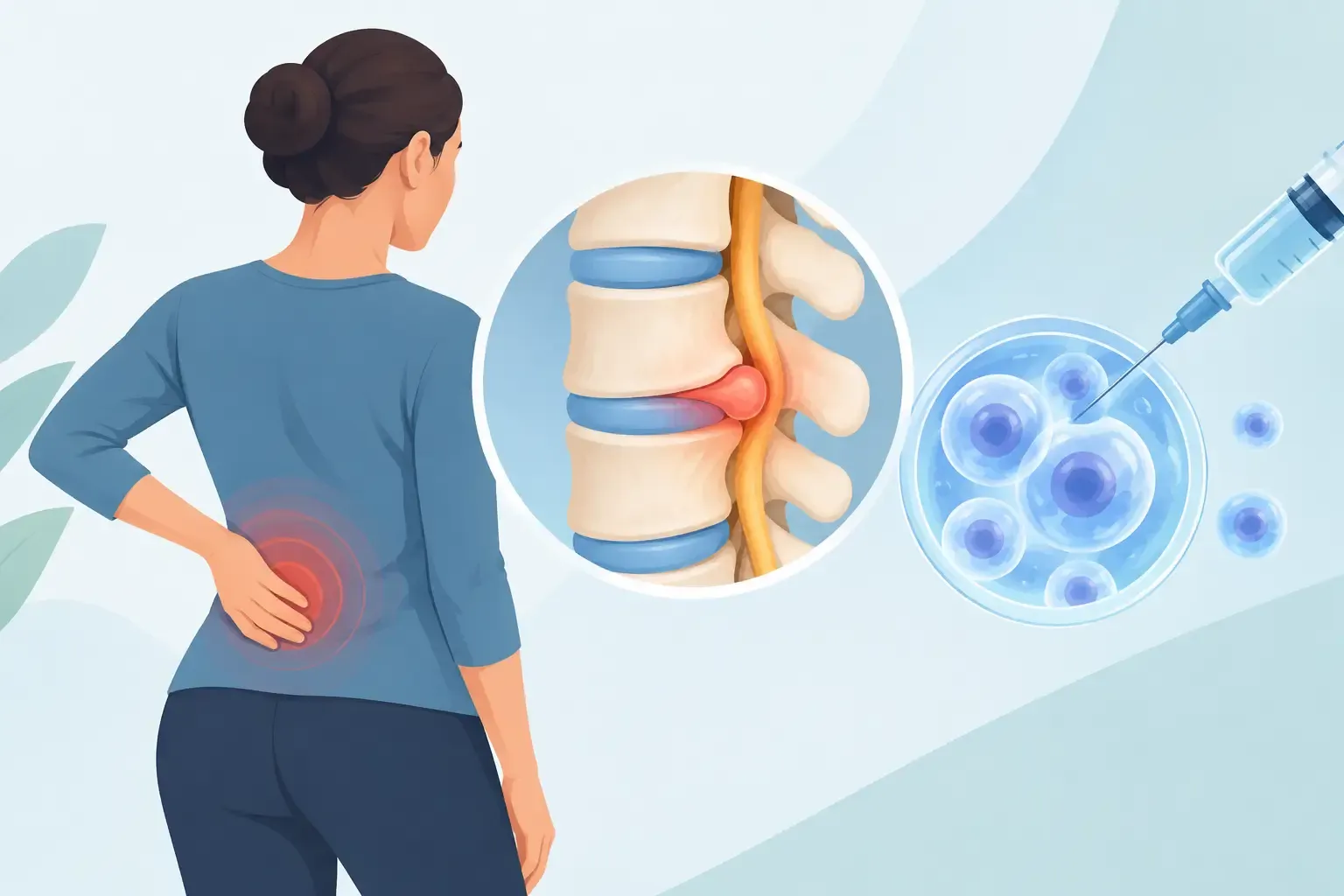
A herniated disc can turn ordinary movement into a calculation. Getting out of a car, lifting a grandchild, standing through a meeting, or sleeping through the night may become difficult when disc material irritates a nearby nerve. For people seeking a less invasive path, stem cell therapy for herniated disc is gaining attention as a regenerative option designed to address inflammation, tissue health, and recovery potential – not simply mask discomfort.
The right plan begins with a clear understanding of what is happening in the spine. A disc problem is not one diagnosis with one answer, and regenerative care should never be treated that way.
Why a Herniated Disc Can Be So Disruptive
Spinal discs are the cushions between the vertebrae. Their tough outer layer, called the annulus, surrounds a softer inner material. A herniation occurs when the inner material pushes through a weakened or torn area of that outer layer. If it contacts or inflames a spinal nerve, pain may travel into the buttock, leg, arm, or hand, depending on the location of the affected disc.
Symptoms can include sharp or burning pain, tingling, numbness, weakness, stiffness, and reduced tolerance for sitting, walking, or exercise. The MRI finding alone does not tell the full story. Some people have a visible herniation with few symptoms, while another person may have significant nerve irritation from a smaller disc injury. A meaningful treatment decision considers imaging, symptoms, physical examination, functional limitations, overall health, and the history of prior care.
Conventional treatment often starts with activity modification, physical therapy, anti-inflammatory medication, or epidural injections. Many patients improve with time and conservative care. Surgery can be appropriate when pain remains severe, weakness progresses, or nerve compression creates urgent symptoms. Yet some patients want to explore options that may support the biology of recovery before moving toward a surgical procedure.
What Stem Cell Therapy for Herniated Disc Aims to Do
Mesenchymal stem cells, often called MSCs, are studied for their ability to communicate with surrounding tissues through signaling molecules, growth factors, and extracellular vesicles. Rather than acting as a simple replacement part for a damaged disc, these cells may influence inflammatory activity and support the local environment involved in tissue maintenance and repair.
For disc-related pain, the therapeutic goal is typically not to promise that a severely degenerated disc will become brand new. The more realistic objective is to support a healthier healing environment, reduce inflammatory signaling when appropriate, and help improve pain, mobility, and function as part of an individualized plan.
Research into cell-based disc therapies is still developing. Early clinical studies and preclinical research have created interest, particularly around pain scores, function, and disc biology, but outcomes vary by patient, cell source, delivery method, disc severity, and study design. A patient deserves that level of candor. Regenerative medicine can be promising without being presented as guaranteed.
At BIOREGENIX, individualized programs may incorporate ethically sourced, expanded umbilical cord-derived MSCs cultivated in a low-oxygen environment. Low-oxygen cultivation is designed to support cellular characteristics associated with a regenerative response. A specialist-led plan may also address systemic inflammation, circulation, tissue oxygenation, metabolic health, and recovery capacity rather than viewing the disc in isolation.
Who May Be a Candidate for Regenerative Spine Care?
The strongest candidates are not selected by an MRI report alone. In general, evaluation may be appropriate for adults with persistent disc-related pain, reduced mobility, recurrent flare-ups, or limited improvement after appropriately guided conservative treatment. Active adults who want to preserve movement and older adults who want to stay independent may both be interested, but their care plans should look very different.
A comprehensive consultation should clarify whether symptoms are consistent with a disc issue, facet joint pain, spinal stenosis, sacroiliac dysfunction, hip pathology, peripheral neuropathy, or more than one source. It should also examine the degree of degeneration and whether there are signs that require urgent conventional medical or surgical assessment.
Certain symptoms should not be managed by delaying evaluation for regenerative treatment. Seek prompt medical attention for:
- New or worsening loss of bowel or bladder control
- Numbness in the groin or saddle area
- Rapidly progressing leg or arm weakness
- Severe pain accompanied by fever, unexplained weight loss, major trauma, or a history that raises concern for infection or cancer
These findings can signal conditions that require immediate diagnostic workup. Patient safety comes before any elective treatment discussion.
The Difference Between a Procedure and a Care Plan
A disc condition can be influenced by more than the disc itself. Chronic inflammation, poor sleep, muscle deconditioning, altered movement patterns, smoking, metabolic dysfunction, and reduced blood flow can all affect recovery and pain sensitivity. That is why a single intervention may not be enough for someone with long-standing spine pain.
A personalized regenerative plan may combine cellular therapy with supportive modalities chosen for the individual. Customized IV therapy can address hydration and nutritional needs when clinically appropriate. Hyperbaric oxygen therapy may support tissue oxygenation. Red light therapy, pulsed electromagnetic field therapy, hormone optimization, and movement-focused rehabilitation may also be considered based on the patient’s health profile and goals.
These therapies are not interchangeable, and they are not automatic additions. The question is whether each component has a clear purpose in the plan. For one patient, the priority may be calming a persistent inflammatory burden. For another, it may be restoring hip and core strength after pain has created months of guarded movement. For a third, sleep, nutrition, and hormone health may be limiting recovery more than they realize.
Questions to Ask Before Choosing a Clinic
Stem cell treatment is a serious medical decision. Patients should expect a detailed review of their history, imaging, medications, past procedures, and goals. They should also receive straightforward answers about the proposed cell source, quality controls, route of administration, expected recovery process, potential risks, and alternatives.
In the United States, patients should understand the regulatory landscape as well. The FDA has not approved stem cell products for the treatment of herniated discs or most orthopedic and spine conditions. This does not end the conversation about regenerative care, but it does make medical oversight, informed consent, sourcing standards, and honest communication essential.
Ask whether the clinic screens for conditions that may make treatment inappropriate, including active infection, uncontrolled disease, certain malignancies, or surgical emergencies. Ask what follow-up looks like and how the team measures progress. Pain relief matters, but so do walking tolerance, sleep, medication use, strength, and the ability to return to meaningful activities.
Setting a Meaningful Goal for Recovery
The best outcome is not defined only by a number on a pain scale. It may mean taking a full walk without planning every rest stop, returning to the gym with confidence, traveling without fearing a flare-up, or getting back on the floor to play with grandchildren. Those goals give a treatment plan direction.
If you are considering regenerative care for a herniated disc, bring your imaging, your treatment history, and an honest description of what pain has taken from your life. A qualified specialist can help determine whether a personalized program fits your condition, your risk profile, and the future you want to move toward.