


PEMF Therapy Benefits for Pain and Recovery
A knee that stiffens after a short walk, a back that protests every time you get out of the car, or a shoulder injury that never feels fully settled can change far more than a workout routine. It can limit work, sleep, travel, and time with family. PEMF therapy benefits are drawing attention because this noninvasive modality may help support the biological conditions the body needs for recovery, without surgery or medication as the first step.
Pulsed electromagnetic field therapy is not a cure-all, and it is not intended to replace a medical diagnosis or individualized treatment plan. For the right patient, however, it can be a valuable component of a broader regenerative strategy focused on inflammation management, circulation, cellular energy, mobility, and recovery.
What Is PEMF Therapy?
PEMF stands for pulsed electromagnetic field. During treatment, a device delivers carefully controlled electromagnetic pulses to a targeted area or to the body more broadly. These pulses interact with the body’s naturally occurring electrical activity at the cellular level.
Every cell relies on electrical gradients to move nutrients, regulate signaling, and maintain normal function. Injury, chronic inflammation, poor circulation, and degenerative changes can disrupt the environment in which cells perform these tasks. PEMF therapy is designed to support cellular communication and tissue function through low-frequency electromagnetic stimulation.
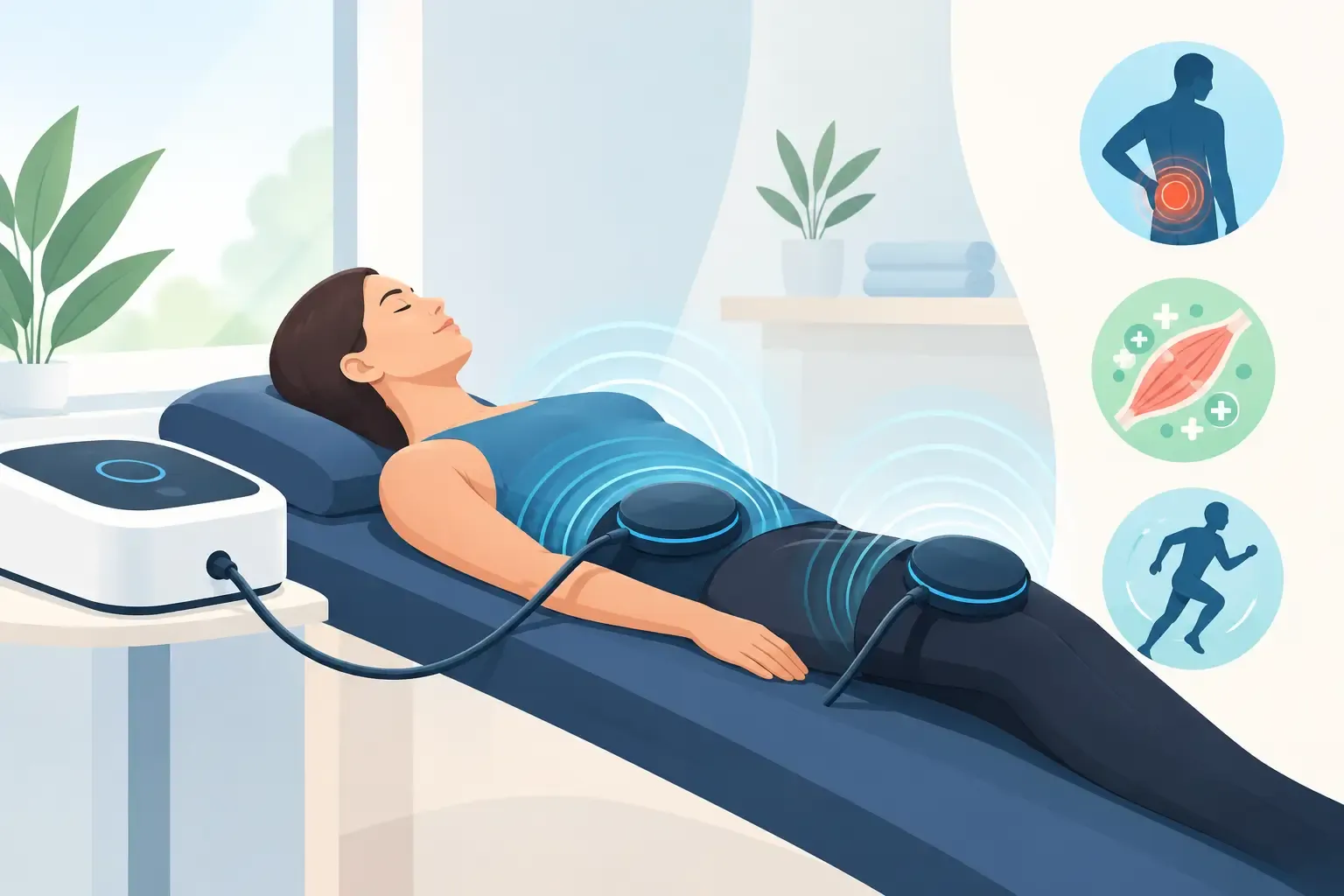
A session is typically comfortable and requires no needles, anesthesia, or downtime. Depending on the device and care plan, patients may lie on a full-body mat or have an applicator positioned near a painful joint, spine segment, or injured soft-tissue area. Some people notice a gentle pulsing sensation, while others feel very little during treatment.
PEMF Therapy Benefits: What Patients May Notice
The most meaningful PEMF therapy benefits are often practical: less stiffness when rising in the morning, improved tolerance for walking or exercise, more comfortable recovery after activity, or a better ability to participate in physical therapy. Results vary according to the underlying condition, severity, overall health, and consistency of care.
Support for pain and inflammation management
Chronic pain is rarely just a symptom to silence. In many cases, it reflects persistent inflammatory signaling, tissue stress, altered nerve sensitivity, mechanical dysfunction, or a combination of these factors. PEMF may help modulate inflammatory processes and support circulation in affected tissues, which can make it a useful adjunct for patients dealing with arthritis, back pain, joint discomfort, or lingering sports injuries.
This does not mean every painful condition responds the same way. A fresh muscle strain, advanced osteoarthritis, nerve-related pain, and pain from a disc injury have different drivers. A regenerative clinician should identify those drivers before positioning any modality as a solution.
Improved recovery after injury or activity
Tissue repair places high energy demands on the body. Cells need oxygen, nutrients, and adequate ATP production to support the processes involved in healing. ATP is often called the energy currency of the cell, and it is essential for normal cellular activity.
Research into electromagnetic field exposure has explored its influence on cellular metabolism, blood flow, and tissue repair signaling. While outcomes depend on the protocol and condition being treated, PEMF is commonly used to support recovery from overuse injuries, tendon irritation, muscle soreness, and orthopedic rehabilitation. For active adults, that may mean creating a more favorable recovery environment between training sessions or after a setback that has reduced mobility.
Mobility and joint comfort
When pain causes someone to move less, stiffness and loss of strength can follow. That cycle can be especially difficult for adults with knee osteoarthritis, hip discomfort, shoulder limitations, or chronic spine conditions. PEMF may help some patients feel more comfortable enough to resume movement-based care, including corrective exercise, rehabilitation, and strength training.
The goal is not merely to feel better for a few hours. It is to make it easier to rebuild the movement capacity that protects long-term independence. For a grandparent, that may be getting down on the floor to play with a child. For an active adult, it may be returning to the golf course, gym, or weekend hikes with greater confidence.
Bone-healing support in appropriate settings
One of the more established clinical applications of certain electromagnetic field technologies is bone-healing support, particularly in specific cases of delayed union or nonunion fractures. FDA-cleared bone-growth stimulators are distinct medical devices with defined indications, so patients should not assume that every PEMF system is equivalent.
That distinction matters. Device type, field strength, frequency, treatment duration, and clinical indication all influence how a therapy is used. A high-quality care plan matches the technology to the patient rather than applying the same protocol to every diagnosis.
Why PEMF Works Best as Part of a Personalized Plan
PEMF therapy can be helpful, but regenerative care is strongest when it addresses the full clinical picture. A painful knee, for example, may involve cartilage wear, inflammation, muscle weakness, poor biomechanics, metabolic factors, and reduced blood flow. A single modality cannot correct every contributor.
At BIOREGENIX, PEMF may be considered alongside advanced therapies selected for a patient’s needs, such as mesenchymal stem cell therapy, customized IV support, hyperbaric oxygen therapy, red light therapy, hormone optimization, or rehabilitation-focused movement strategies. The purpose of combining modalities is not to add treatments for their own sake. It is to create a coordinated environment that supports tissue oxygenation, cellular repair, inflammation control, and functional recovery.
For patients pursuing regenerative medicine, PEMF may be used before or after other therapies based on physician guidance. The appropriate timing depends on the diagnosis, treatment goals, medical history, and response over time. Someone managing an acute orthopedic injury needs a different plan than someone with long-standing degenerative joint changes or a complex autoimmune condition.
What the Evidence Can and Cannot Tell Us
PEMF has been studied across musculoskeletal pain, osteoarthritis, bone healing, soft-tissue recovery, and other applications. Some research suggests potential benefits for pain reduction and physical function, particularly in certain orthopedic settings. At the same time, study quality, device settings, treatment schedules, and patient populations vary widely.
That means promising evidence should not be translated into guaranteed outcomes. A patient may experience meaningful relief, modest improvement, or no noticeable change. The best use of PEMF is grounded in realistic expectations, measurable goals, and regular reassessment.
A clinically responsible plan should define what improvement looks like before treatment begins. That could include walking farther with less pain, reducing nighttime discomfort, gaining range of motion, recovering more effectively after physical therapy, or returning to a specific daily activity. If those goals are not being met, the plan should be adjusted rather than continued automatically.
Safety Considerations Before Starting PEMF
PEMF is generally considered well tolerated when used appropriately, but noninvasive does not mean appropriate for everyone. Patients with implanted electronic devices, such as pacemakers or certain neurostimulators, should receive medical clearance before treatment because electromagnetic fields may interfere with device function.
Pregnancy, active cancer, seizure disorders, unexplained pain, recent surgery, and complex medical conditions also warrant individualized medical review. Anyone with new weakness, loss of bowel or bladder control, severe swelling, fever, unexplained weight loss, or sudden worsening pain should seek prompt medical evaluation rather than relying on a wellness modality.
The quality of the device and the expertise guiding its use matter as well. Consumer products vary substantially from medical-grade systems, and a home device may not be appropriate for a significant injury or chronic condition. A qualified clinician can help determine whether PEMF fits the diagnosis and how it should be integrated with other care.
How to Think About PEMF for Your Health Goals
If pain, injury, or stiffness has steadily narrowed your life, the right question is not simply, “Can PEMF help?” A better question is, “What is driving this problem, and what combination of care gives me the best chance to move forward?”
PEMF may offer a supportive, low-burden way to encourage recovery and improve comfort while you pursue a broader plan for stronger movement and healthier tissue. The most valuable next step is a personalized evaluation that treats your goals – whether that is walking without hesitation, avoiding unnecessary surgery, or staying active for the people who count on you – as part of the clinical picture.