


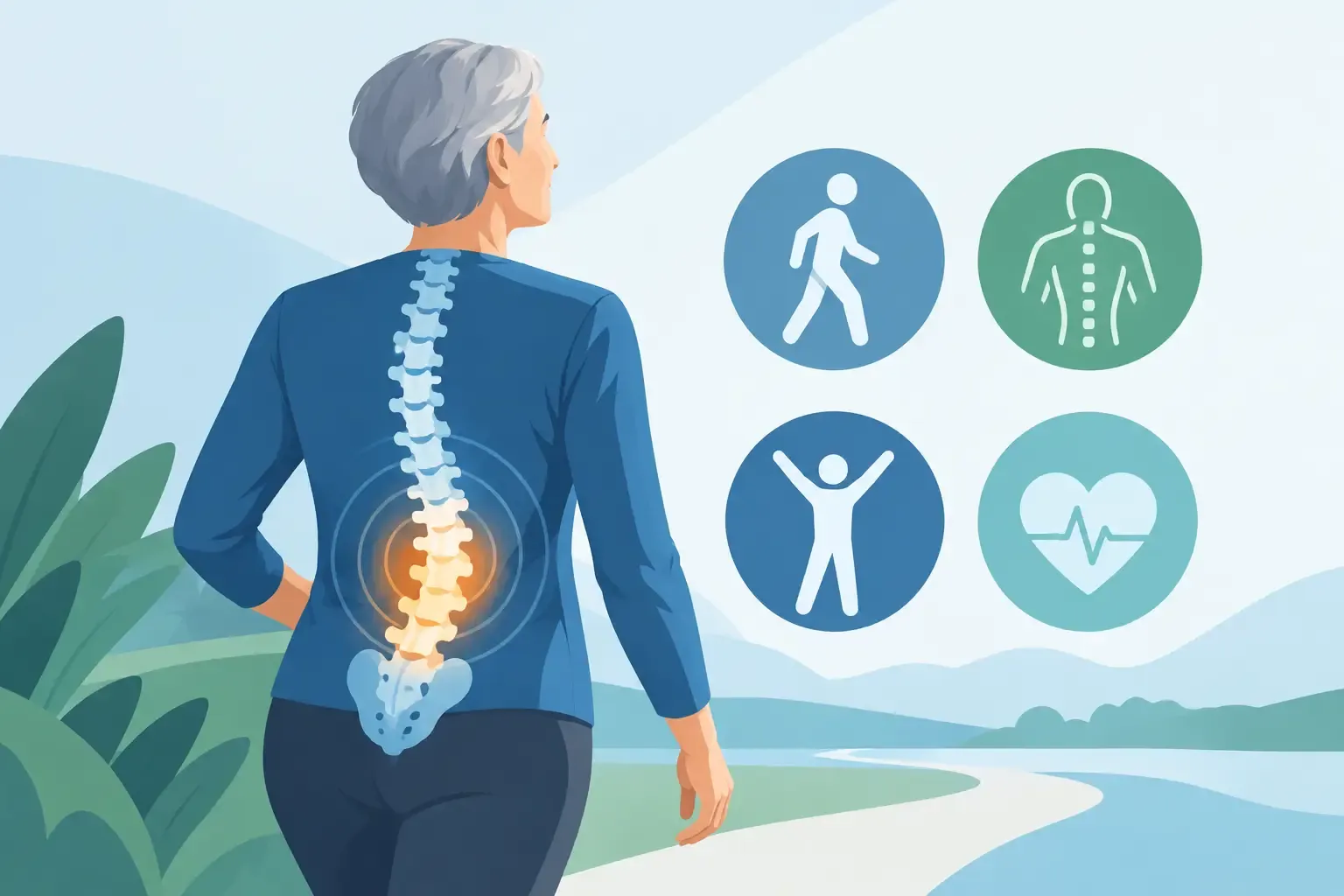
Spinal Stenosis Patient Outcomes That Matter Most
A scan can show narrowing in the spinal canal, but it cannot tell the full story of how a person feels walking through a grocery store, standing at a family event, or getting out of bed. Spinal stenosis patient outcomes are shaped by far more than an MRI finding. The location and severity of nerve compression matter, but so do inflammation, muscle strength, balance, activity level, overall health, and the care plan chosen.
For many adults, the outcome that matters most is not a perfect image. It is being able to walk farther, sleep more comfortably, exercise with confidence, and stay present for the people and experiences they value. That requires an individualized view of the condition – not a one-size-fits-all path toward medication, injections, or surgery.
What Spinal Stenosis Means for Daily Function
Spinal stenosis occurs when spaces within the spine become narrower, placing pressure on the spinal cord or nearby nerve roots. It most often affects the lower back, called lumbar spinal stenosis, though narrowing can also develop in the neck, or cervical spine.
In the lumbar spine, symptoms may include aching or burning pain in the back, buttocks, thighs, or legs. Some people develop numbness, heaviness, tingling, weakness, or cramping that worsens while standing or walking and improves when leaning forward or sitting down. This pattern is often called neurogenic claudication.
Cervical stenosis can present differently. Pressure on the spinal cord may affect hand coordination, balance, gait, or fine motor control. Because cervical spinal cord compression can become serious, progressive weakness, frequent falls, loss of dexterity, or new bowel or bladder changes warrant prompt medical evaluation.
Symptoms and imaging do not always move in lockstep. One patient may have pronounced narrowing on an MRI with modest symptoms, while another has meaningful pain and mobility limits despite findings described as mild or moderate. The goal of assessment is to connect anatomy with function: which activities have become difficult, which neurologic signs are present, and whether symptoms are stable, improving, or progressing.
Which Spinal Stenosis Patient Outcomes Matter Most?
Pain scores are useful, but they are only one part of the picture. A meaningful outcome is practical: Can you stand long enough to cook? Walk around the block without stopping? Travel without planning every step around discomfort? Return to golf, strength training, gardening, or playing on the floor with grandchildren?
Clinicians commonly look at several connected markers of progress:
- Walking tolerance, gait stability, and the ability to stand upright
- Leg pain, back pain, tingling, numbness, and nighttime discomfort
- Strength, reflexes, coordination, and changes in neurologic function
- Reliance on anti-inflammatory drugs, pain medication, or repeated procedures
- Participation in work, exercise, social life, and family activities
The best plan also considers durability. A short-term reduction in discomfort is valuable, but patients should ask whether their treatment supports the physical capacity needed to maintain gains. Restoring hip mobility, core endurance, leg strength, and movement confidence can influence how well symptom relief translates into a more active life.
Why Results Vary From Person to Person
Spinal stenosis is usually part of a broader degenerative process. Disc height can decline, facet joints may become arthritic, ligaments can thicken, and inflammation may sensitize already compressed nerves. For that reason, two people with the same diagnosis can have very different treatment experiences.
Duration and severity of nerve compression are important. Long-standing numbness or muscle weakness may be less likely to fully resolve than newer symptoms, particularly when nerve tissue has been under chronic stress. Age alone does not determine outcome, but conditions such as diabetes, vascular disease, osteoporosis, obesity, smoking, poor sleep, and low activity can affect tissue healing, inflammation, and rehabilitation capacity.
The source of pain matters as well. Stenosis may be present alongside disc degeneration, sacroiliac dysfunction, hip arthritis, peripheral neuropathy, or myofascial pain. Treating only the MRI finding can miss contributors that keep a patient limited. A careful diagnostic process should identify whether symptoms truly arise from spinal nerve compression and whether there are multiple pain generators.
Expectations also need to be realistic. Non-surgical care may reduce pain and improve function substantially, but it may not reverse advanced structural narrowing. Surgery can create more space for compressed nerves when appropriate, yet it also carries recovery demands and potential complications. There is no universally superior option. The right approach depends on symptoms, neurologic findings, anatomy, health status, and personal goals.
Building a Non-Surgical Plan Around Function
For patients without progressive neurologic deficits or urgent surgical indications, non-surgical care is often the first step. The most effective plans are usually layered rather than passive. They may include targeted physical therapy, progressive strength and balance training, weight management where relevant, anti-inflammatory nutrition, medication management, and image-guided injections when clinically appropriate.
Physical therapy is not simply a collection of stretches. A personalized program can improve walking mechanics, hip and thoracic mobility, trunk control, and leg strength while helping patients find positions that reduce nerve irritation. Some people tolerate flexion-based movements well, while others need a different approach. The response to activity should guide progression.
Interventional procedures can also have a role. Epidural steroid injections may offer temporary relief for selected patients with radicular pain, potentially making it easier to participate in rehabilitation. However, response varies, benefits may fade, and repeated injections are not a complete long-term strategy for every patient.
At BIOREGENIX, an individualized regenerative care model may incorporate advanced therapies intended to support the body’s repair environment, reduce inflammatory burden, and improve overall recovery capacity. Depending on medical suitability, this may include mesenchymal stem cell-based protocols alongside customized IV therapy, hyperbaric oxygen, red light therapy, pulsed electromagnetic field therapy, and metabolic or hormone optimization.
These therapies should be discussed candidly. Regenerative medicine for spinal conditions is an evolving field, and stem cell products are not FDA-approved specifically to treat spinal stenosis. They are not a substitute for timely surgical evaluation when there is progressive weakness, spinal cord compromise, or loss of bowel or bladder control. A responsible program uses thorough screening, transparent discussion of evidence and risks, and measurable functional goals.
When Surgery Changes the Outlook
Surgical decompression may be considered when conservative measures fail to restore acceptable quality of life, or when neurologic symptoms progress. Procedures such as laminectomy remove or reshape structures that narrow the canal. In some cases, fusion is considered when instability, deformity, or significant vertebral slippage is also present.
For appropriately selected patients, surgery can improve leg-dominant symptoms and walking tolerance. Yet the trade-offs deserve attention. Recovery can take time, especially after fusion, and surgery does not guarantee that every source of back pain will disappear. Scar tissue, adjacent-level degeneration, deconditioning, and unrelated joint problems can still affect long-term comfort and mobility.
Patients often make stronger decisions when they ask specific questions: Is my main limitation nerve-related leg pain, mechanical back pain, or both? Is there evidence of weakness or spinal cord risk? What improvement is realistic for walking, sleep, and daily activity? What happens if I wait, and what signs mean I should not wait?
Measuring Progress Beyond the Scan
Before treatment begins, establish a baseline that reflects real life. Record how far you can walk, how long you can stand, the activities you have stopped doing, your sleep disruption, and how often symptoms require medication. Revisit those markers over time instead of relying only on a number from zero to 10.
Progress is rarely perfectly linear. A flare after doing more can happen while strength and capacity are improving overall. The important distinction is whether recovery from activity becomes easier, tolerance expands, and symptoms are becoming less frequent or less disruptive. New weakness, worsening balance, saddle numbness, or bowel and bladder changes are different – these are reasons to seek urgent medical care.
Your outcome should be defined by the life you want to resume, not simply by the condition listed on a radiology report. Start with one measurable goal, whether that is walking a mile, returning to the gym, or carrying a grandchild without fear, and work with qualified medical professionals to build a plan that makes that goal clinically realistic.