


Red Light Therapy Joint Pain: What to Know
A knee that stiffens after a short walk, hands that ache when opening a jar, or a shoulder that wakes you at night can make everyday life feel smaller. For many people, red light therapy joint pain protocols are appealing because they are noninvasive, do not require downtime, and may complement a broader plan for restoring movement.
The promise is not that light can erase every cause of joint pain. Arthritis, tendon injury, cartilage loss, spinal conditions, and autoimmune inflammation each require a different clinical lens. But properly applied red and near-infrared light, often called photobiomodulation, may help support cellular energy, circulation, and inflammation management in targeted tissue.
How Red Light Therapy May Affect Joint Pain
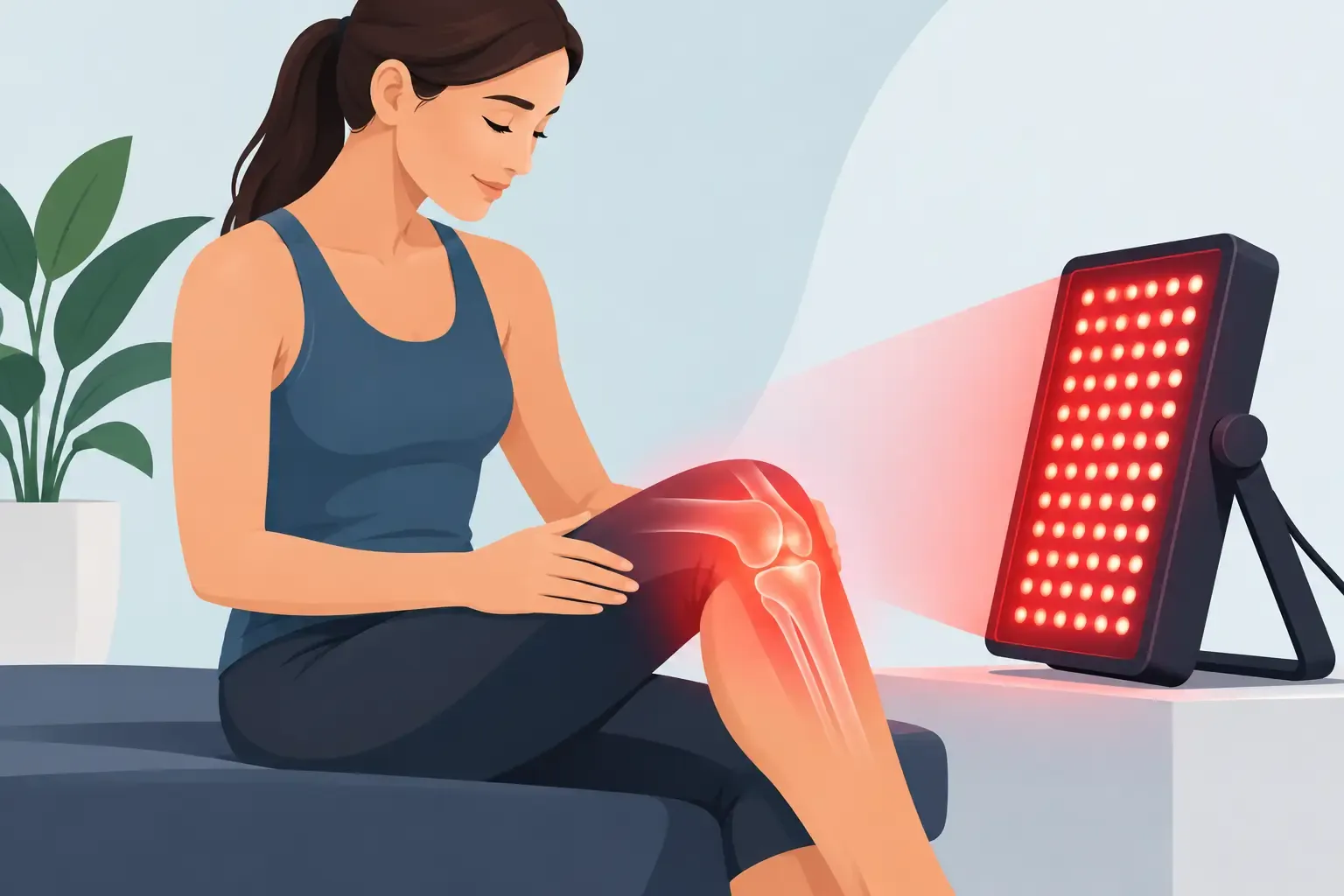
Red light therapy uses specific wavelengths of visible red light and invisible near-infrared light. Red wavelengths generally act closer to the surface, while near-infrared wavelengths can reach deeper soft tissue. The goal is not to heat the joint aggressively. It is to deliver a controlled dose of light energy that cells can absorb.
At the cellular level, photobiomodulation is thought to interact with mitochondria, the structures responsible for producing ATP, the energy currency cells use to function and repair. Research also suggests these wavelengths may influence nitric oxide signaling, microcirculation, oxidative stress, and inflammatory pathways. For a painful joint, those effects may translate into less stiffness, improved comfort with movement, or a better environment for recovery.
That distinction matters. Red light therapy is not a replacement for cartilage, a cure for autoimmune disease, or a substitute for evaluating a serious injury. Its value is often as one part of an individualized plan that addresses the biological drivers of pain rather than simply masking symptoms.
What the Evidence Suggests
Clinical research on photobiomodulation for musculoskeletal pain is promising but not uniform. Some studies report improvements in pain, function, and range of motion for conditions such as knee osteoarthritis, neck pain, tendinopathy, and certain inflammatory joint concerns. Other studies find smaller benefits or inconsistent outcomes.
The variation is understandable. Studies use different wavelengths, power levels, treatment times, schedules, and device designs. They also enroll patients with different diagnoses and stages of degeneration. A protocol that helps someone with mild knee osteoarthritis may not be enough for someone with advanced bone-on-bone degeneration, a meniscus tear, or pain referred from the lower back.
For patients, the practical takeaway is simple: red light therapy may be a worthwhile supportive modality, but results depend on the diagnosis, the quality of the device, the dose delivered, and the larger treatment strategy. It should be viewed with realistic optimism, not as a one-size-fits-all solution.
Pain relief and tissue recovery are not the same thing
A reduction in discomfort can make it easier to walk, exercise, sleep, or participate in physical therapy. That is meaningful. Yet feeling better does not automatically mean the underlying structure has fully healed.
For example, a patient with chronic knee pain may use red light therapy to reduce stiffness enough to strengthen the surrounding muscles. In that setting, light therapy can support progress by making movement more tolerable. If the joint has significant instability, a complex tear, or severe degeneration, however, additional intervention may still be necessary.
Who May Benefit Most
Red light therapy is often considered by adults managing chronic joint discomfort, overuse injuries, age-related stiffness, or a slow recovery after activity. It may be especially useful for people who want to reduce reliance on temporary symptom-management approaches while building a more comprehensive mobility plan.
Potential candidates include people with mild to moderate osteoarthritis, persistent tendon or ligament irritation, joint stiffness after exercise, and chronic soft-tissue discomfort around the shoulder, hip, knee, wrist, or ankle. Active adults may use it as a recovery tool, while older adults may value the possibility of moving more comfortably through daily routines, travel, and time with family.
It depends on the source of pain. Sudden swelling, a visibly deformed joint, fever, inability to bear weight, unexplained numbness or weakness, or pain after a significant fall requires prompt medical evaluation. Light therapy should never delay assessment of symptoms that could signal infection, fracture, nerve compression, or another urgent condition.
What a Quality Treatment Plan Looks Like
At-home devices can be convenient, but device quality varies widely. Marketing terms such as “red light” do not reveal whether a panel, wrap, or handheld unit delivers an appropriate wavelength or clinically meaningful energy dose. More intensity is not always better, either. Photobiomodulation has a dose-response relationship, and excessive treatment may offer no added benefit.
A medically guided plan begins with the joint itself: What is damaged or inflamed? Is pain being driven by cartilage loss, tendon pathology, spinal referral, systemic inflammation, muscular weakness, or an old injury that never recovered properly? From there, treatment can be organized around achievable goals, such as walking farther with less pain, returning to golf, improving sleep, or preparing the body for rehabilitation.
For some patients, red light therapy is combined with targeted exercise, nutrition and metabolic support, physical rehabilitation, pulsed electromagnetic field therapy, IV therapy, or hyperbaric oxygen. These approaches work differently. Red light therapy may help optimize the local tissue environment and cellular energy, while movement restores strength and stability, and other therapies may address circulation, oxygenation, inflammation, or whole-body recovery.
At BIOREGENIX, complementary modalities can also be incorporated into a regenerative strategy that may include ethically sourced, expanded umbilical cord-derived mesenchymal stem cells. The purpose is not to apply every therapy to every patient. It is to coordinate therapies around the individual, the diagnosis, and the desired outcome.
What to Expect During Treatment
Professional red light therapy sessions are generally comfortable. The treatment area is exposed to the light for a defined period, often over a series of sessions. Patients may feel gentle warmth depending on the device, though heat is not the primary mechanism. Consistency typically matters more than a single session.
Some people notice a change in stiffness or comfort relatively early, particularly when pain is linked to soft-tissue irritation. Others require several weeks before they can judge whether the treatment is helping. Tracking practical measures is useful: morning stiffness, pain during stairs, walking tolerance, sleep disruption, or the ability to complete a favorite activity.
A thoughtful clinician will adjust the plan based on those markers. If symptoms are worsening, treatment should not simply continue on autopilot. The diagnosis and protocol may need to be revisited.
Safety Considerations for Red Light Therapy
Red light therapy is generally considered low risk when used appropriately, but low risk does not mean risk-free. Eye protection is essential with powerful devices, particularly near-infrared systems, because the light may be intense even when it is not visibly bright. Avoid treating directly over known or suspected cancerous lesions unless a treating physician specifically advises otherwise.
People who use photosensitizing medications, have a condition affected by light exposure, are pregnant, or are receiving active cancer treatment should seek individualized medical guidance first. Anyone with implanted medical devices or a complex health history should also disclose that information before adding a new therapy.
The best results come from precision, not guesswork. A light source, a joint, and a promise of relief are not a complete care plan. When joint pain has limited the way you live, a qualified evaluation can help determine whether red light therapy belongs in your path back to stronger, more confident movement.