


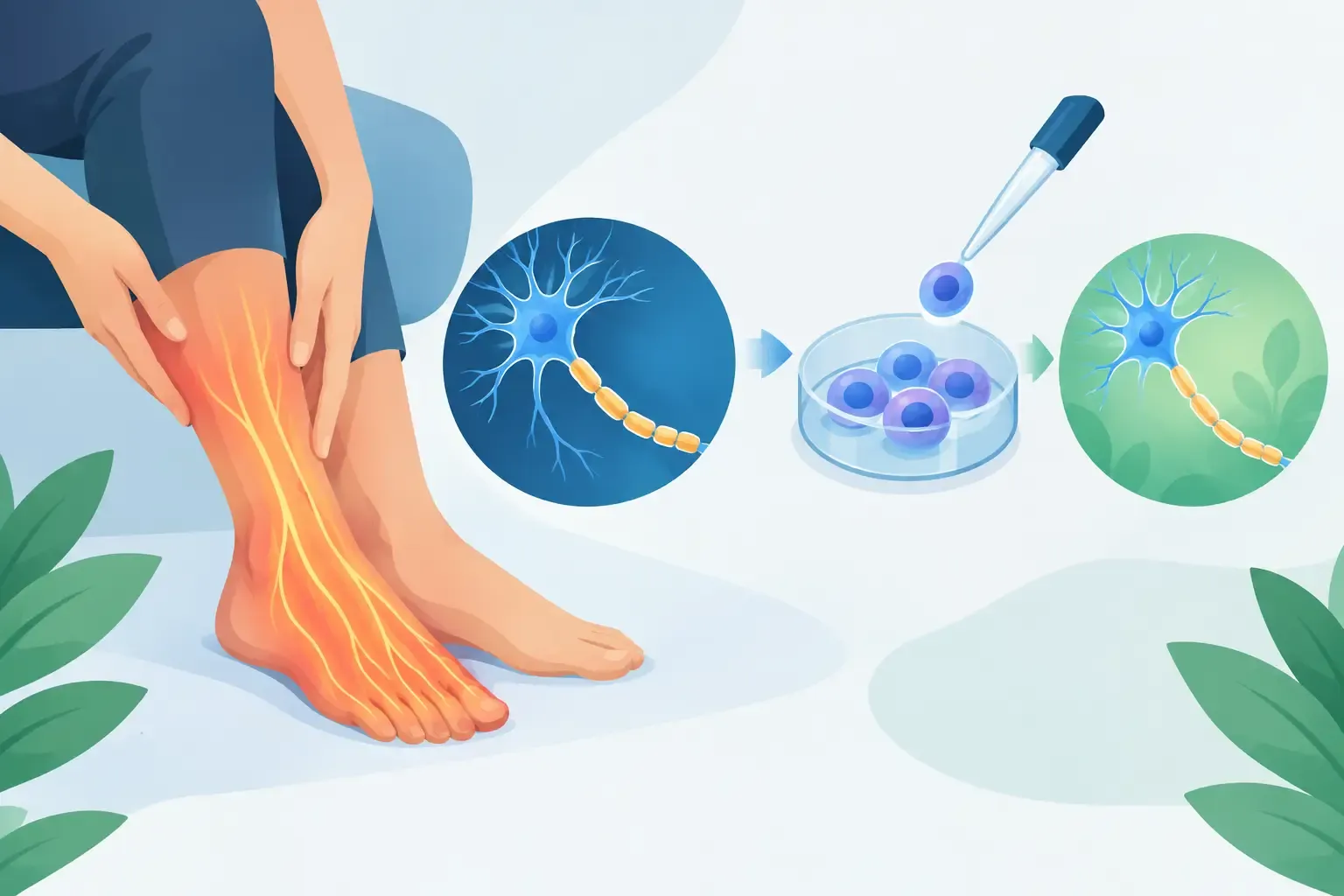
Does Stem Cell Therapy for Neuropathy Work?
Burning feet at night, a loss of balance on uneven ground, or numb fingers that make buttons difficult to manage can change far more than comfort. Neuropathy can limit sleep, movement, exercise, work, and the confidence to stay active. For people whose symptoms persist despite conventional care, stem cell therapy for neuropathy has become an area of serious interest – and one that deserves a clear-eyed discussion.
Neuropathy is not one single disease. It is a pattern of nerve damage with many possible causes, including diabetes, chemotherapy, autoimmune activity, spinal compression, vitamin deficiencies, alcohol use, infections, and certain medications. A meaningful regenerative plan begins by identifying what is driving the nerve injury, not simply trying to quiet the symptoms.
What Peripheral Neuropathy Does to the Body
Peripheral nerves carry messages between the brain, spinal cord, skin, muscles, and internal organs. When those nerves are irritated, compressed, undernourished, or damaged, the messages can become distorted or fail to travel efficiently. Symptoms may include tingling, burning pain, electric sensations, weakness, cramping, temperature sensitivity, numbness, or changes in coordination.
The location and pattern matter. Symptoms that begin in both feet and move upward may point to a systemic process such as diabetes or a nutritional deficiency. Pain that follows one leg from the low back may involve a spine or disc condition. Sudden weakness, rapidly progressing numbness, or bowel and bladder changes require prompt conventional medical evaluation.
Many standard neuropathy treatments focus on symptom management. Medications may reduce nerve pain for some patients, while physical therapy, blood-sugar control, nutritional correction, decompression procedures, and lifestyle changes can address contributing factors. These approaches remain valuable. Yet some people continue to experience symptoms or cannot tolerate the side effects of long-term medication, which is why regenerative medicine is being studied as a complementary path.
How Stem Cell Therapy for Neuropathy May Help
Mesenchymal stem cells, often called MSCs, are being investigated for their signaling properties rather than as a simple replacement part for injured nerves. MSCs can release bioactive factors that may influence inflammation, immune activity, blood-vessel support, and the local environment around damaged tissue. Researchers are studying whether these signals can help create conditions more favorable for nerve repair.
That distinction matters. A responsible clinician should not promise that cells will regrow every damaged nerve or erase years of neuropathy. Nerves heal slowly, and the potential response depends on the cause, severity, duration, circulation, metabolic health, and the patient’s ability to reduce ongoing nerve stress.
For a patient with diabetes-related neuropathy, improved metabolic management may be central to any progress. For someone with pain driven by spinal narrowing or disc disease, addressing mechanical compression may be equally important. When neuropathy is connected to autoimmune disease or chemotherapy, the treatment plan must account for the underlying condition and the patient’s broader medical history.
In a regenerative setting, expanded umbilical cord-derived MSCs may be considered because they are valued for their paracrine signaling potential and their ability to communicate with injured tissues. At BIOREGENIX, ethically sourced MSCs are cultivated using a low-oxygen process intended to support cellular performance before individualized clinical use. The clinical question is never just whether to use cells. It is whether the entire protocol fits the patient’s diagnosis, risk profile, and treatment goals.
What the Research Suggests – and What It Does Not Yet Prove
Preclinical research and early clinical investigations have produced encouraging findings around MSCs and nerve injury. Studies have explored reductions in inflammatory signaling, support for microcirculation, and improvements in measures related to nerve function and neuropathic pain. This body of research provides a rationale for continued investigation, particularly for difficult conditions such as diabetic peripheral neuropathy.
However, the evidence is still developing. Studies vary widely in cell source, dose, delivery method, patient population, follow-up time, and the way outcomes are measured. A result from a small trial cannot automatically predict an individual patient’s outcome. High-quality, larger controlled trials are still needed to establish where cellular therapy provides the most reliable benefit and which protocols are best.
Patients should also understand the regulatory landscape. In the United States, stem cell products marketed for neurologic conditions require careful scrutiny. Patients deserve direct answers about product sourcing, processing, quality testing, physician oversight, informed consent, potential risks, and whether a proposed therapy has FDA approval for their specific condition. No reputable clinic should use urgency, vague claims, or guarantees to pressure a decision.
Why a Multi-Therapy Plan Can Matter
Nerves do not recover in isolation. They depend on circulation, oxygen delivery, metabolic stability, movement, sleep, nutrient status, and a manageable inflammatory burden. This is why a cellular treatment, when clinically appropriate, may be paired with supportive modalities rather than treated as a stand-alone event.
Hyperbaric oxygen may support tissue oxygenation in selected patients. IV therapy can be customized around hydration and nutritional needs. Red light therapy and pulsed electromagnetic field therapy are often used with the goal of supporting circulation, cellular energy production, and recovery. Hormone evaluation, epigenetic testing, and targeted lifestyle guidance can help identify additional factors that may be affecting energy, inflammation, or resilience.
These therapies are not interchangeable, and more treatment is not always better. A patient with uncontrolled blood sugar may need metabolic stabilization before an advanced regenerative protocol. Someone taking immune-modulating medications requires careful coordination with their treating specialists. The strongest plans are disciplined and individualized, not one-size-fits-all packages.
What a Thoughtful Evaluation Should Include
Before considering regenerative care, a patient should receive a careful review of the neuropathy itself. That may include prior laboratory work, imaging, nerve conduction studies or electromyography, medication history, diabetes markers, vascular health, autoimmune history, nutritional status, and relevant cancer or chemotherapy history.
A thorough consultation should clarify practical goals as well. Is the priority sleeping through the night with less burning pain? Walking farther without instability? Returning to golf, strength training, travel, or playing on the floor with grandchildren? Clear functional goals make it easier to evaluate progress over time.
Patients should expect a discussion of possible benefits, alternatives, limitations, adverse effects, cost, and follow-up. They should also ask how the clinic measures response. Symptom scores, balance, walking tolerance, strength, sensation, and nerve testing can all provide useful information when interpreted in context.
Who May Be a Candidate?
Potential candidates are often adults with persistent peripheral neuropathy who have been evaluated for reversible causes and have not achieved acceptable relief with conventional treatment alone. People managing diabetes-related nerve symptoms, chronic inflammatory conditions, post-injury nerve dysfunction, or neuropathy occurring alongside orthopedic and spine concerns may seek an advanced consultation.
Candidacy depends on more than symptom severity. Active infection, untreated cancer concerns, unstable medical conditions, poor circulation, or an unclear diagnosis may change the timing or suitability of treatment. A regenerative specialist should coordinate with a patient’s primary care physician, neurologist, endocrinologist, pain specialist, or oncologist when appropriate.
The goal is not to replace conventional medicine. It is to build a wider strategy for patients who want to address neural health at the cellular level while continuing the medical care that protects them.
Setting Realistic Expectations for Recovery
Neuropathic symptoms can fluctuate, and nerve recovery often moves slowly. Some patients notice changes in comfort, sleep, stamina, or sensation over weeks to months. Others may need more time, see only partial improvement, or find that treatment does not produce a meaningful response. An honest plan accounts for all three possibilities.
The most constructive next step is a detailed assessment that connects the cause of neuropathy to a personalized care strategy. When advanced cellular therapy is considered with rigorous screening, quality controls, and supportive therapies, patients can make a more informed decision about whether it belongs in their path toward steadier movement, greater independence, and a more active life.