


Stem Cell Therapy for Autoimmune Disease
Autoimmune symptoms can make ordinary life feel unpredictable. One week, you may have the energy to work, exercise, and spend time with family. The next, inflammation, fatigue, pain, brain fog, or digestive symptoms can narrow your world. Stem cell therapy for autoimmune disease is drawing attention because it aims to address a central driver of these conditions: an immune system that has lost the ability to regulate itself appropriately.
For the right candidate, regenerative medicine may become part of a broader strategy to support immune balance, reduce inflammatory burden, and protect quality of life. It is not a one-size-fits-all cure, and it should not replace thoughtful medical management. It is, however, a developing area of modern medicine that deserves a clear-eyed look.
Why autoimmune disease is so difficult to treat
In autoimmune disease, the immune system mistakenly targets healthy tissues. The exact target differs by diagnosis. It may be the joints in rheumatoid arthritis, the intestinal lining in inflammatory bowel disease, the nervous system in multiple sclerosis, the skin in psoriasis, or the thyroid in Hashimoto’s disease.
Conventional care often focuses on lowering immune activity, controlling inflammation, and preventing damage. These treatments can be essential, especially when disease activity is severe. Yet many patients still live with symptoms between flares, medication side effects, reduced mobility, or the feeling that their care plan manages a crisis without fully addressing the environment that allows chronic inflammation to persist.
That gap is where regenerative medicine enters the conversation. The goal is not simply to suppress the immune system. It is to explore whether cellular signaling, tissue support, and personalized metabolic care can help the body move toward a more regulated state.
How stem cell therapy for autoimmune disease may work
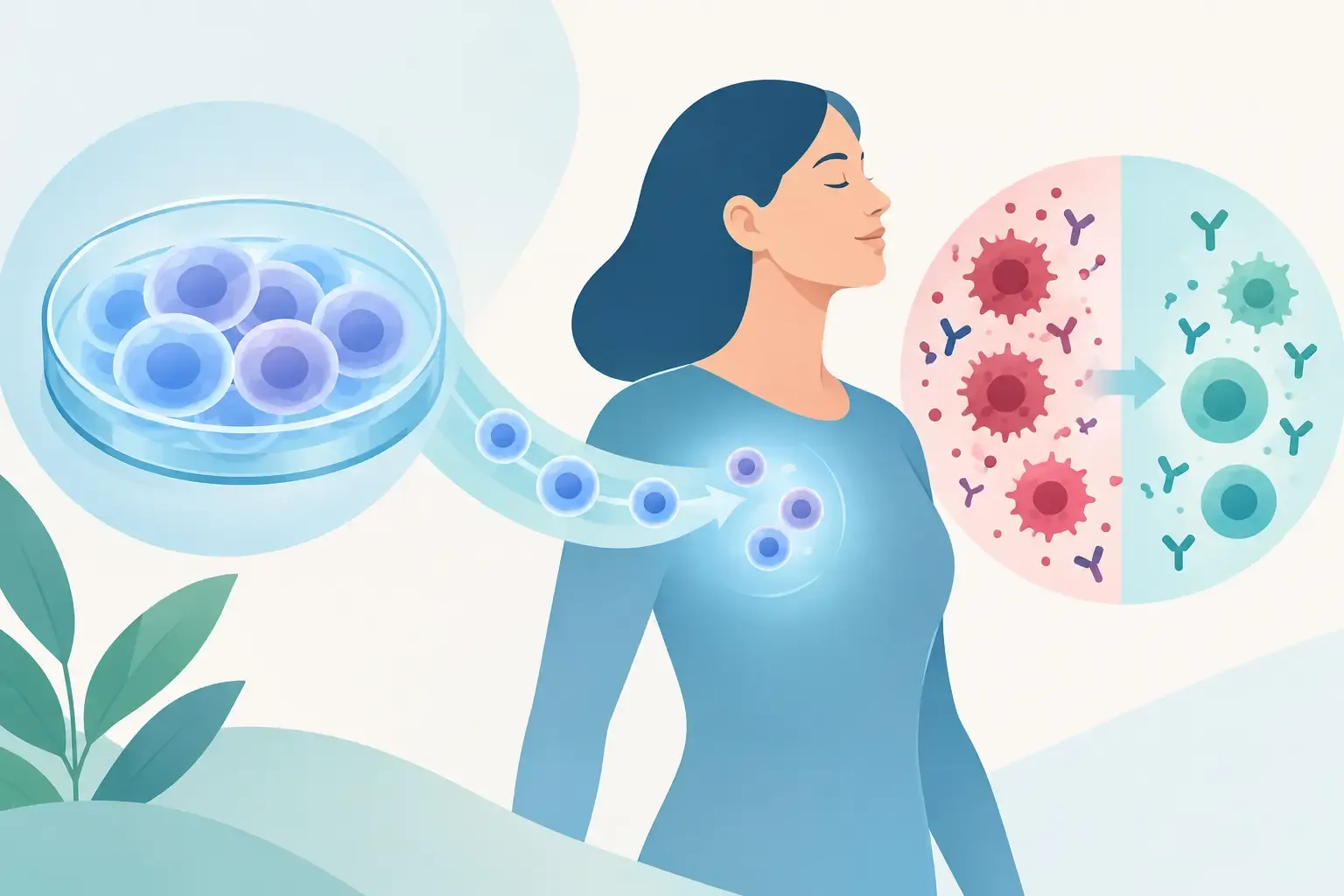
Mesenchymal stem cells, often called MSCs, are valued less for becoming replacement tissue and more for the signals they send. MSCs communicate with immune cells through paracrine signaling, releasing biologically active factors that may influence inflammation, immune-cell behavior, blood-vessel support, and tissue repair.
In autoimmune conditions, this immunomodulatory potential is particularly relevant. Research suggests MSCs may help influence the activity of T cells, B cells, macrophages, and other immune messengers involved in inflammatory responses. They may also support regulatory pathways that help the immune system distinguish between a true threat and the body’s own tissues.
The word may matters. Autoimmune disease is complex, and response can depend on the diagnosis, disease stage, current medications, organ involvement, overall health, and the quality and type of cellular product used. Stem cell therapy should be approached as individualized regenerative care, not as a guaranteed outcome.
Why source and processing matter
Not all stem cell products are equivalent. For patients considering MSC therapy, cell sourcing, screening, manufacturing standards, viability, and clinical oversight are meaningful quality questions.
Expanded umbilical cord-derived MSCs are commonly discussed because they are obtained from ethically donated birth tissue after healthy deliveries, rather than from embryonic tissue. In a carefully controlled setting, these cells can be cultured to expand available cell numbers. Low-oxygen cultivation is designed to more closely reflect the cells’ natural biological environment and may help preserve cellular characteristics relevant to regenerative signaling.
A responsible program should be transparent about donor screening, sterility testing, identity testing, cell handling, and the physician’s rationale for the proposed protocol. Advanced therapy is only as credible as the standards behind it.
What a personalized treatment plan can include
Autoimmune conditions rarely affect only one system. Chronic inflammation can disrupt sleep, reduce physical activity, affect mood, strain the gut, impair recovery, and accelerate muscle loss or joint decline. That is why a cellular treatment plan may be paired with therapies that support the body’s healing environment.
At BIOREGENIX, individualized plans may combine MSC therapy with complementary modalities chosen around a patient’s symptoms, history, and clinical goals. IV therapy can support hydration and nutrient status. Hyperbaric oxygen therapy may increase tissue oxygenation, while red light therapy and pulsed electromagnetic field therapy may be used to support cellular energy, circulation, pain management, and recovery.
The purpose is not to pile on treatments. It is to coordinate the right tools around the patient. If inflammation has limited your movement, a plan may emphasize pain reduction, tissue support, and progressive mobility. If fatigue and poor recovery are the larger concerns, the focus may shift toward ATP production, oxygenation, nutritional status, hormone balance, sleep, and nervous-system support.
Who may be a candidate?
A strong candidate evaluation begins with more than a diagnosis. A clinician should review your current symptoms, medical history, medications, imaging or laboratory work when available, prior treatment response, disease activity, and the specific outcomes you hope to regain.
Some patients seek help because standard options have not provided enough relief. Others want to preserve joint function, remain active with children or grandchildren, manage persistent fatigue, or explore a less invasive option before degenerative changes become more limiting. These goals are reasonable, but they must be matched to a realistic clinical discussion.
People with active infection, uncontrolled medical conditions, certain cancer histories, pregnancy, or complex organ involvement may require additional evaluation or may not be appropriate candidates. Patients should also disclose all immunosuppressive medications and biologics. Changes to prescribed autoimmune treatment should only be made in coordination with the physician managing that condition.
Questions to ask before moving forward
Cell therapy deserves the same thoughtful scrutiny you would apply to any significant medical decision. Ask what type of cells are being used, where they are sourced, how they are tested, and why the clinician believes the proposed route and dose fit your needs. Ask what outcomes are realistic for your diagnosis and how progress will be tracked over time.
You should also ask about risks. While MSC therapy is often described as well tolerated in clinical settings, no procedure is risk-free. Depending on the delivery approach, risks can include temporary soreness, headache, fatigue, fever, bruising, infection, allergic reaction, or complications related to IV or injection procedures. The safety profile also depends on the product, processing methods, patient health, and quality of follow-up care.
In the United States, many stem cell uses for autoimmune disease remain investigational and are not FDA-approved as standard treatments. Patients should be cautious of any clinic promising a cure, encouraging them to abandon necessary specialist care, or offering vague answers about product testing and safety procedures.
Setting expectations for healing
Regenerative care is rarely an overnight event. Some patients notice early changes in energy, stiffness, sleep, or comfort. Others require more time for inflammatory patterns, mobility, and tissue recovery to shift. For chronic autoimmune conditions, meaningful progress may look like fewer disruptive days, more consistent movement, improved resilience, or the ability to return to activities that once felt out of reach.
Your daily choices still matter. Anti-inflammatory nutrition, appropriate movement, stress management, restorative sleep, medication adherence, and regular follow-up create the foundation on which any advanced treatment must work. Cellular therapy can be a powerful component of care, but it cannot compensate for a plan that ignores the rest of the body.
The most productive next step is a careful conversation with qualified medical professionals who can assess your history, explain the evidence and limitations, and build a plan around your life rather than your diagnosis alone. When autoimmune symptoms have taken too much from your routine, pursuing informed, individualized options can be a meaningful way to take back more of your movement, independence, and time with the people you love.