


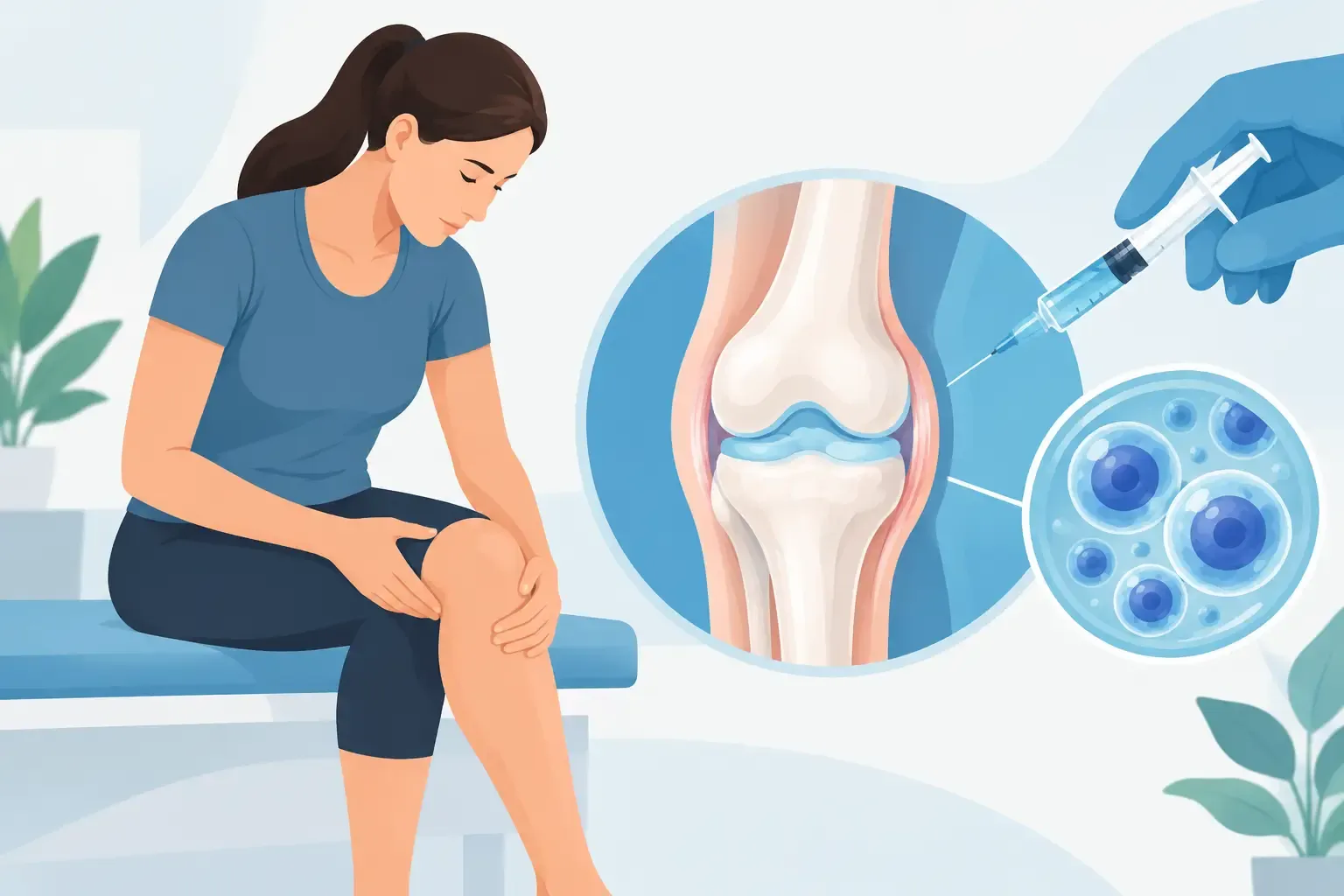
Is Stem Cell Therapy for Knee Pain Right for You?
The moment knee pain makes you hesitate before stairs, turn down a walk with your grandchildren, or give up the sport that keeps you feeling like yourself, the issue becomes bigger than a sore joint. Stem cell therapy for knee pain is drawing attention because it approaches the problem at the cellular level, with the goal of supporting the body’s repair response rather than simply masking symptoms.
For the right candidate, regenerative medicine may offer a less invasive path forward when rest, physical therapy, injections, and medications have failed to deliver lasting progress. It is not a one-size-fits-all cure, and it is not a substitute for a careful diagnosis. But for people seeking a personalized alternative to surgery or long-term symptom management, it can be an important conversation to have with qualified medical specialists.
Why Knee Pain Can Be So Difficult to Resolve
The knee is a high-demand joint. Every step transfers force through cartilage, tendons, ligaments, muscle, and bone. Years of repetitive movement, an old sports injury, excess load, poor biomechanics, or inflammatory disease can gradually change how these structures function together.
Osteoarthritis is one of the most common causes of persistent knee pain, particularly after age 50. As cartilage breaks down and the joint environment becomes more inflammatory, people may experience stiffness, swelling, grinding, loss of range of motion, and pain during weight-bearing activities. Meniscus injuries, ligament damage, tendon problems, and post-traumatic arthritis can create a similar cycle of discomfort and reduced activity.
Conventional care can be valuable. Physical therapy strengthens the structures that support the joint. Weight management can reduce mechanical stress. Anti-inflammatory medications and corticosteroid injections may help control symptoms. Surgery may be appropriate when structural damage is severe. Yet these approaches do not always address the biological conditions that limit healing, especially in tissues with limited blood supply.
That is where regenerative strategies may enter the picture.
How Stem Cell Therapy for Knee Pain Works
Mesenchymal stem cells, often called MSCs, are studied for their ability to communicate with damaged and inflamed tissue. Rather than functioning as a simple replacement part, MSCs release signaling factors that may help regulate inflammation, support cellular repair processes, encourage blood-vessel formation, and influence the local healing environment.
In a knee affected by degeneration or injury, the goal is not merely to chase pain relief. A thoughtfully designed treatment plan aims to improve the conditions surrounding the joint: excessive inflammation, impaired tissue oxygenation, poor cellular signaling, and reduced capacity for recovery.
At BIOREGENIX, treatment programs may incorporate expanded, ethically sourced umbilical cord-derived MSCs cultivated through a low-oxygen process. This type of cultivation is designed to support cellular performance before treatment. A physician-led plan may also include targeted administration strategies and complementary therapies selected around the patient’s diagnosis, health history, activity goals, and recovery capacity.
The science is promising, but the details matter. Cell source, processing standards, dose, delivery method, patient selection, and clinical oversight can all influence the experience and potential outcome. A clinic should be transparent about its protocols, quality controls, and the realistic role of treatment in a patient’s broader care plan.
Who May Be a Candidate?
A person does not need to be in constant, severe pain to explore regenerative care. Many candidates are active adults who can still function but feel their world narrowing: fewer rounds of golf, shorter walks, difficulty kneeling, or a growing reliance on pain medication just to get through the day.
Stem cell-based treatment may be considered for people with mild to moderate osteoarthritis, chronic knee inflammation, lingering pain after an injury, tendon or soft-tissue concerns, or a desire to pursue non-surgical options before considering joint replacement. It may also appeal to patients who have exhausted standard conservative measures without achieving meaningful relief.
However, candidacy depends on more than an MRI report. Advanced bone-on-bone arthritis, major joint deformity, an unstable ligament injury, active infection, uncontrolled autoimmune activity, or certain cancer histories may change the recommended approach. Some patients need surgery, and some benefit most from a combined plan that includes orthopedic evaluation, rehabilitation, nutrition, and regenerative support.
A strong consultation should include a review of imaging, prior treatments, medications, overall health, mobility limitations, and the life activities you want to return to. The question is not simply, “Do I have knee pain?” It is, “What is driving it, and what does my joint need to function better?”
What a Personalized Regenerative Plan Can Include
Knee recovery rarely happens in isolation. Cellular therapies may be more meaningful when the body has the oxygen, circulation, metabolic support, and movement strategy needed to respond well.
For that reason, an individualized plan may combine MSC therapy with IV therapy, hyperbaric oxygen therapy, red light therapy, pulsed electromagnetic field therapy, and targeted hormone or wellness support when clinically appropriate. These modalities are selected for different reasons. Hyperbaric oxygen may support tissue oxygenation. Red light and PEMF may be used to support circulation, cellular energy production, and recovery. IV therapies can help address nutrient and hydration needs that affect healing capacity.
This does not mean every patient needs every therapy. More treatment is not automatically better treatment. A premium regenerative program should be tailored, medically supervised, and built around clear priorities: reduce the factors holding recovery back, support the body’s repair processes, and track whether function is actually improving.
Progress Is More Than a Pain Score
Pain matters, but it is not the only marker of success. Meaningful progress may look like walking farther without swelling, standing through a family event, returning to strength training, sleeping without being awakened by discomfort, or feeling more confident on uneven ground.
Recovery timelines also vary. Some people notice changes in comfort or mobility within weeks, while tissue remodeling and functional gains may unfold over several months. Age, severity of degeneration, body composition, activity level, inflammation, and adherence to rehabilitation can all affect the pace of improvement.
Questions to Ask Before Choosing a Clinic
Regenerative medicine deserves careful decision-making. The field includes genuine scientific advancement, but it also includes broad marketing claims that can leave patients unclear about what they are receiving.
Before moving forward, ask what type of cells are being used, how they are sourced and processed, whether the treatment is performed under physician supervision, and how the clinic determines candidacy. Ask how your knee condition will be evaluated, what complementary care is recommended, what follow-up looks like, and how the team will measure your response over time.
It is also reasonable to ask about safety. Any injection-based procedure carries potential risks, including pain at the injection site, bleeding, infection, and inflammatory reactions. Your provider should discuss risks, benefits, alternatives, and expected limitations in language you can understand. In the United States, patients should also know that many stem cell interventions are not FDA-approved for orthopedic conditions, even as research into MSCs and regenerative therapies continues to evolve.
Be cautious of anyone guaranteeing cartilage regrowth, promising to eliminate the need for surgery in every case, or offering the same protocol to every patient. Knee pain is personal. Care should be, too.
Protecting Your Results After Treatment
Regenerative treatment is not a permission slip to return immediately to high-impact activity. The knee still needs time, intelligent loading, and support. A clinician may recommend a gradual return to movement, physical therapy, strength work for the hips and quadriceps, mobility exercises, and adjustments to activities that repeatedly aggravate the joint.
Long-term joint health also benefits from attention to sleep, protein intake, hydration, inflammation management, and body weight when appropriate. These fundamentals are not glamorous, but they help create the internal environment where cellular repair has the best opportunity to do its work.
The real goal is not simply a quieter knee. It is the ability to move with confidence again – to travel, exercise, play on the floor with your grandchildren, and make plans without first calculating how much the joint will hurt. If knee pain has been shrinking your life, a personalized regenerative evaluation can help clarify whether a cellular approach belongs in your next step forward.